
Lantern nights, blossom days

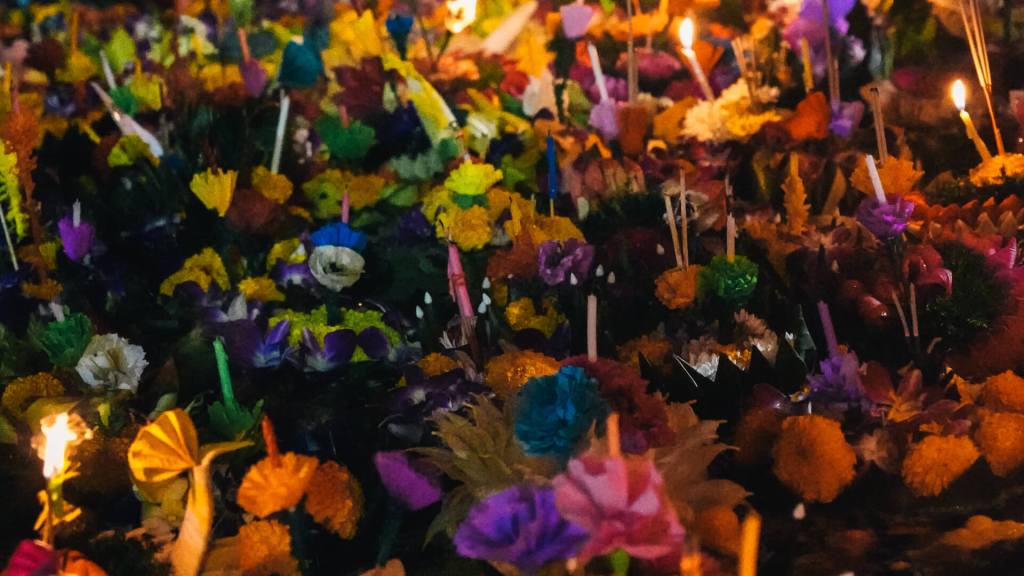
Some cities reveal their beauty after sunset, others shine brightest in daylight. But Chiang Mai – the cultural heart of Northern Thailand – is exceptional in offering both: nights illuminated by drifting lanterns and days bursting with colour.
Perched amid the real mountains – a landscape far higher than most of Thailand – Chiang Mai was once the centre of the Lanna Kingdom, a civilisation that left a remarkable cultural imprint. The northern highlands also created a climate unlike anywhere else in the country, ideal for growing coffee, strawberries, and roses.
Lanna heritage comes alive each November during Yi Peng, while this distinctive climate gives rise to a second treasure: the Chiang Mai Flower Festival in February.
Yi Peng
Yi Peng is an ancient celebration during which the city of Chiang Mai is transformed by numerous glowing khom kwaen lanterns and the release of floating khom loi lanterns into the night sky. The sight of a sky filled with lights has become one of Chiang Mai’s most iconic images – but equally striking are the intricate lantern displays at Buddhist temples and ornate sculptures at the city’s major landmarks.
The festival is held on the full moon of November and coincides with Loy Krathong Night, when people across Thailand float small floral boats known as krathong on rivers and lakes. Historically, the two traditions developed separately, but over time, they naturally blended.
Today, the meanings behind the drifting krathong and the rising khom loi are closely aligned. Both represent the release of misfortune, a wish for happiness in the future, and a gesture of gratitude.
Originally, the launching of sky lanterns was a modest affair – something quietly done among families or within local communities, at temples or near bodies of water.
In recent years, Chiang Mai has transformed Yi Peng into a globally recognized spectacle with thousands of participants and numerous lanterns. For 2026, the province has officially announced what is expected to be the largest Yi Peng celebration in history. The event invitation highlights the three key types of ‘Yi Peng Lights’: the airborne khom loi, the classic earthen oil lamps known as phang prathip and the floating krathongs.
Chiang Mai Flower Festival
Yi Peng marks the end of the rainy season, after which Northern Thailand eases into its cool months. The highlight of this season is the Chiang Mai Flower Festival, held every February.
Like Yi Peng, the festival unfolds over more than a single day. For an entire week, Chiang Mai becomes a fragrant, blooming city, adorned with chrysanthemums, tulips, bougainvillea, and countless other blossoms. The programme includes a vibrant floral parade and a spectacular exhibition at Nong Buak Haad Park.
Chiang Mai’s grand floral sculptures are as emblematic as the khom loi lanterns that fill the night sky. Yet the festival also has a quieter, more intimate symbol – the damask rose. Introduced from the Middle East a thousand years ago, it proves the Flower Festival’s history just as ancient as that of Yi Peng.
 Real Life in Phuket Magazine