
Lesson’s from Vogue’s global reset and the rise of 72 Magazine
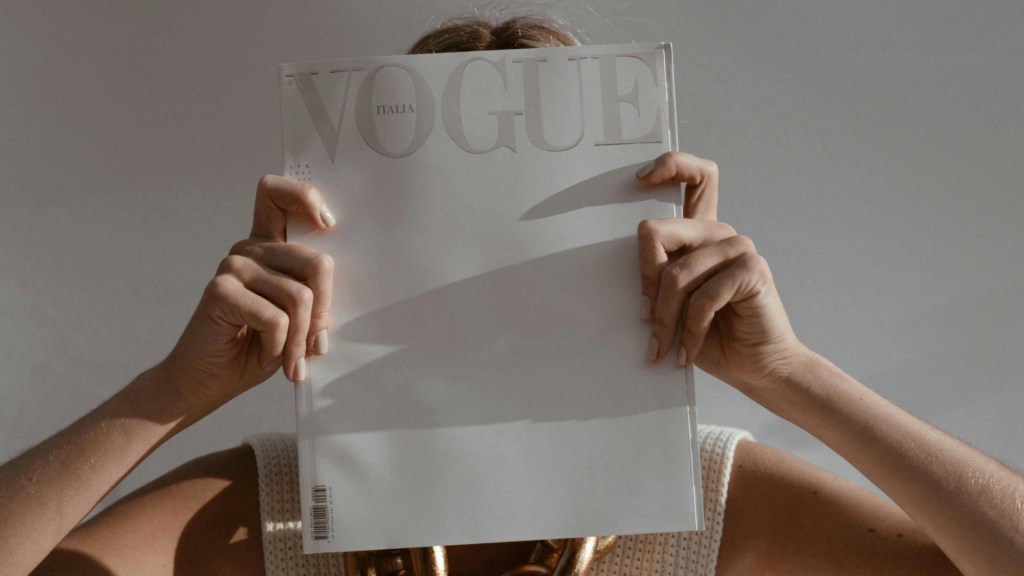
For years, we’ve been told the same thing: print journalism is dead. This summer, that tired chorus returned – louder than ever – and just as wrong. What made the moment especially striking is that it coincided with one of the most important shifts in the publishing world in recent decades.
The trigger? Headlines swirling around Condé Nast, the global powerhouse behind Vogue, GQ, The New Yorker, and Wired. But in typical social media fashion, the headlines didn’t tell the whole story.
On Instagram and Facebook, the story was reduced to a few dramatic lines: Anna Wintour and Edward Enninful stepping down from their editorial roles at American and British Vogue. What those posts didn’t explain was where they were going – and why it matters.
In truth, both Wintour and Enninful stepped off the bridge of their individual flagships to take on far broader responsibilities over whole fleets. Whether planned or not, Condé Nast’s moves sparked more than a changing of the guard – they launched a reinvention of what legacy print media could be.
LESSON 1: Don’t take headlines at face value
Anna Wintour is not leaving Vogue. She’s not leaving Condé Nast. Quite the opposite: after nearly four decades at the helm of American Vogue, she has stepped into a larger, more influential global role.
She now serves as Condé Nast’s Chief Content Officer and Vogue’s Global Editorial Director, overseeing 27 national editions of the magazine, including her original U.S. base.
What does that mean? While each edition – American, British, Italian, and beyond – continues under the day-to-day leadership of locally connected editors, Wintour now ensures brand alignment, long-term vision, and the unmistakable quality standard that defines Vogue across every market.
LESSON 2: Think global, act local – with standards
Vogue’s reset offers a new blueprint for media in 2025: preserve editorial heritage, maintain consistent global standards, and empower local leaders who understand their audiences.
This balance between global coordination and local execution is the cornerstone of the new Condé Nast model – and it’s already becoming a defining trait of successful modern media.
Almost simultaneously with Anna Wintour’s transition to a global role, Edward Enninful stepped down as Editor-in-Chief of British Vogue. But just like Wintour, his move signals expansion, not retreat. Enninful is now launching his own publishing house, EE72, and its flagship product will once again be print – a new magazine titled 72.
The first issue of 72 Magazine is expected to debut this September. Behind it is a hand-picked editorial team led by Enninful himself – many of whom worked with him during his time at Vogue. Though the magazine will be produced entirely outside the Condé Nast structure, it won’t be a rival to Vogue as much as a counterpart.
In fact, 72 enters the same cultural space as Vogue, but with a mission to explore different formats and fresh editorial voices – the kinds of stories that don’t always fit into the framework of a heritage brand. While independent, 72 Magazine is clearly shaped by the same creative DNA.
LESSON 3: Quality media still has room to grow
Contrary to common belief, this isn’t a battle of survivors clinging to the last space in print. The field isn’t shrinking – it’s expanding.
The same people who understand the industry best are the ones launching new publications alongside their legacy titles, not in opposition to them. Enninful’s 72 Magazine will occupy a unique space, offering experimental formats and underrepresented narratives that might not fit within Vogue’s refined legacy – and yet the two remain in creative conversation.
The new Condé Nast model is based on decentralized editorial management combined with a unified global direction. It may sound complex, and in practice it is, but this structure gives Vogue the flexibility it needs to thrive in today’s media environment.
At the same time, 72 Magazine is emerging in the same high-end space as Vogue, but with a distinctly different purpose: to provide a platform for alternative narratives, experimental visual storytelling, and emerging voices that don’t yet have a place in traditional luxury media. 72 may not be a Condé Nast title, but it exists because of it – a product born from the same creative ecosystem, now taking a bold step outward.
LESSON 4: Print isn’t vanishing – it’s evolving
In 2025, a magazine is no longer just a print product. It’s the foundation for an entire media constellation – social platforms, podcasts, videos, branded events, merchandise, even real estate.
But in a world of algorithm-driven content that can be launched in minutes, there’s something enduring about a beautifully edited, physically printed issue with Anna Wintour or Edward Enninful’s name on the masthead.
The print edition is the anchor – the physical and symbolic center of a much wider brand universe.
LESSON 5: AI has made human storytelling more valuable than ever
What sets Wintour and Enninful’s ventures apart today isn’t just reputation – it’s their personal authority, human taste, and unmatched networks.
In a media landscape flooded with anonymous AI-generated content, the distinctiveness of a human editor – with their vision, voice, and values – becomes the ultimate differentiator.
This summer’s changes at Condé Nast didn’t mark the end of print. They marked its rebirth.
A renaissance is underway. And it begins not with an algorithm – but with editors who still know the weight of a printed page.
 Real Life in Phuket Magazine