
The true meaning of Phuket Vegetarian Festival
Photos by Maksim Romashkin
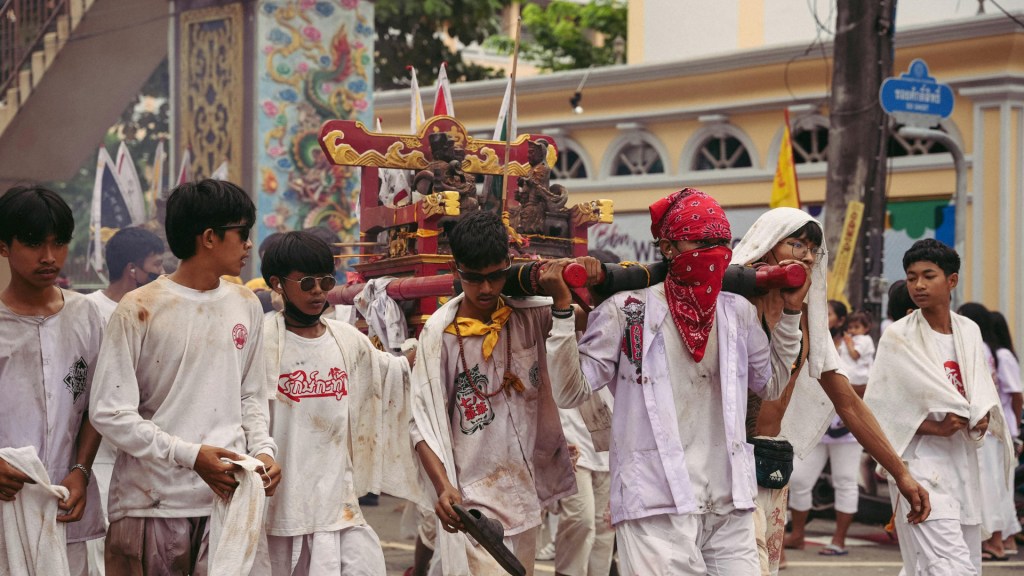
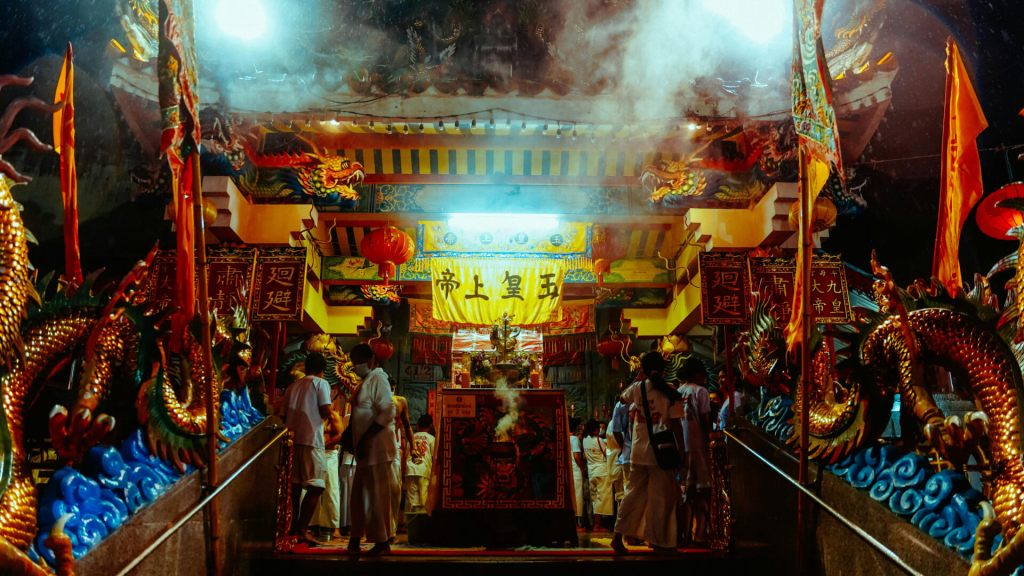
A Phuketian’s calendar is full of festive events. Each year, the island celebrates holidays ranging from Western and Russian Christmas to the Buddhist Makha Bucha Day, the Chinese Hungry Ghost Festival, and the Muslim Ramadan. However, standing out among them is the Vegetarian Festival, a unique local event in honor of the nine Chinese Emperor Gods. The festival is 100% Phuket heritage.
The festival, known locally as Kin Je, officially dates back to 1825. During this time, the island witnessed an influx of Chinese immigrants, the main workforce in the tin mines. The businesses were often owned by the descendants of Chinese immigrants to Malacca, known as Baba-Nyonya or Peranakan.
The Kin Je festival was born out of bad luck. In 1825, an epidemic broke out among the poor migrant workers, and no cure was seen. The solution came from the visiting performers from China who also fell ill and then turned to the nine Emperor Gods, as it was exactly the time to honor them according to the Chinese calendar.
The main idea of the Vegetarian Festival is not about vegetarian food. The cornerstone is the purification of the body and mind, with vegetarianism being among the practical elements. Participants follow a complex code of rules regarding physical health and pay much attention to prayers and rituals intended to purify the spirit.
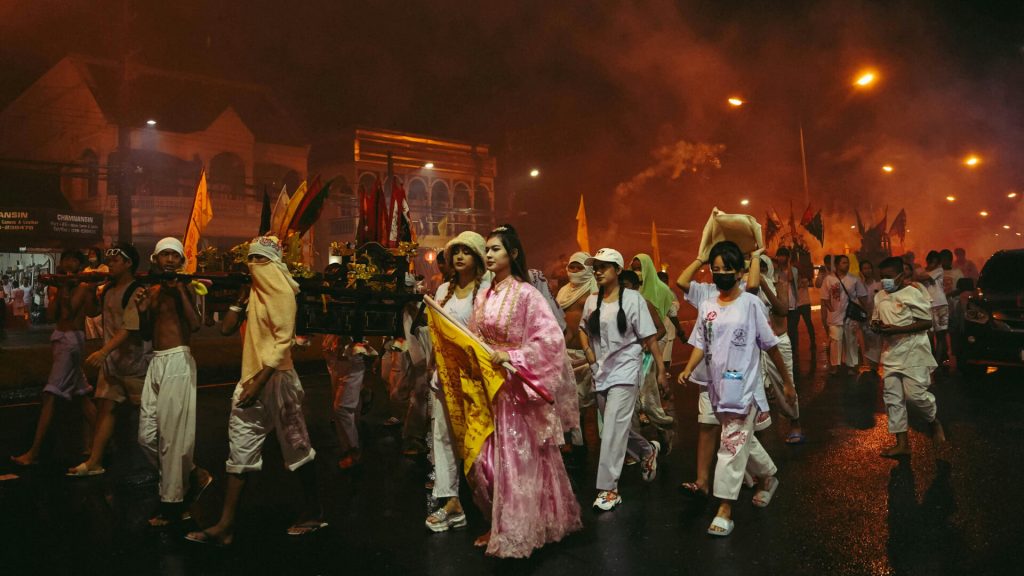
“During street processions, Ma Song pass the blessings to people, ridding them of all bad things.”
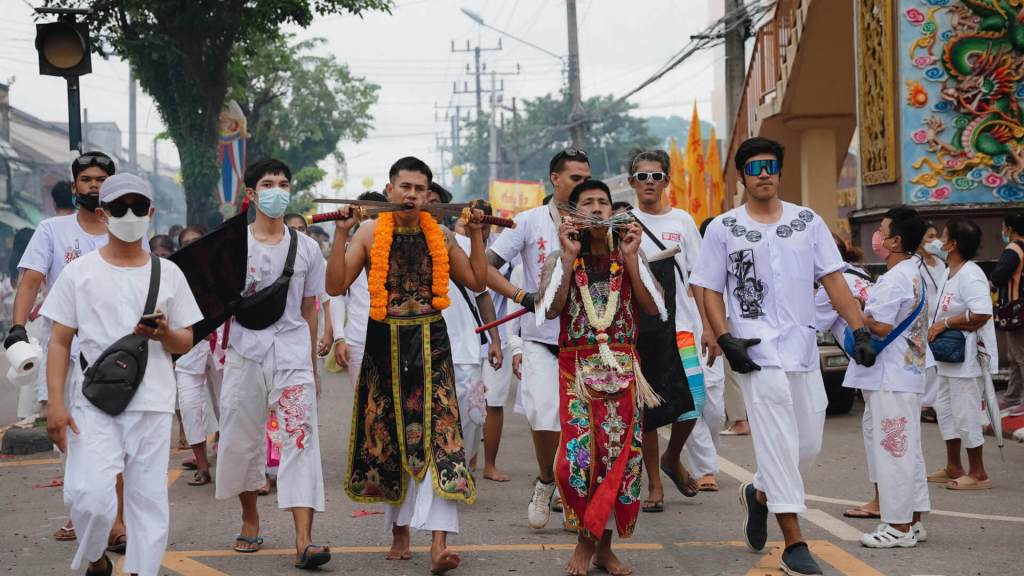
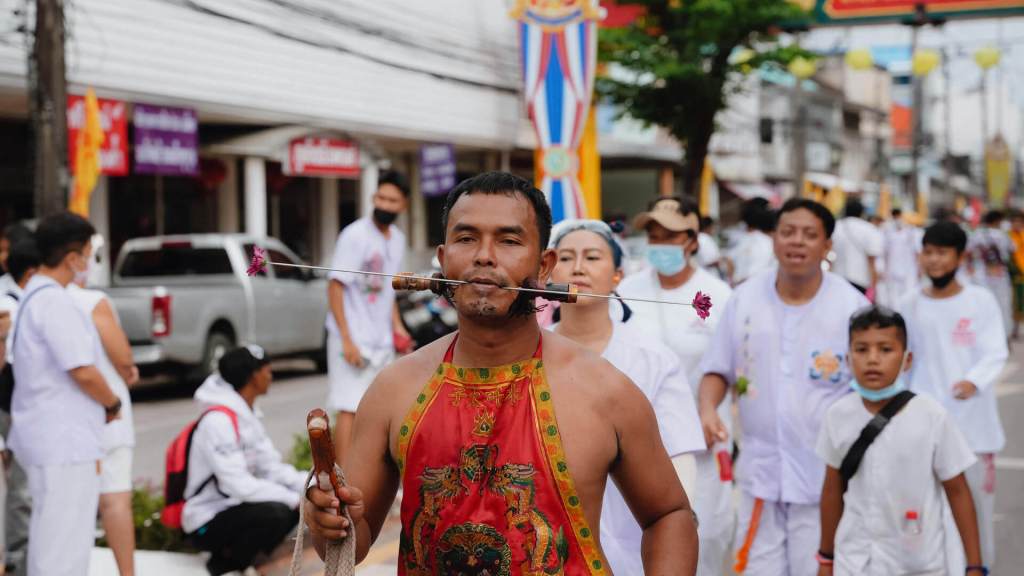
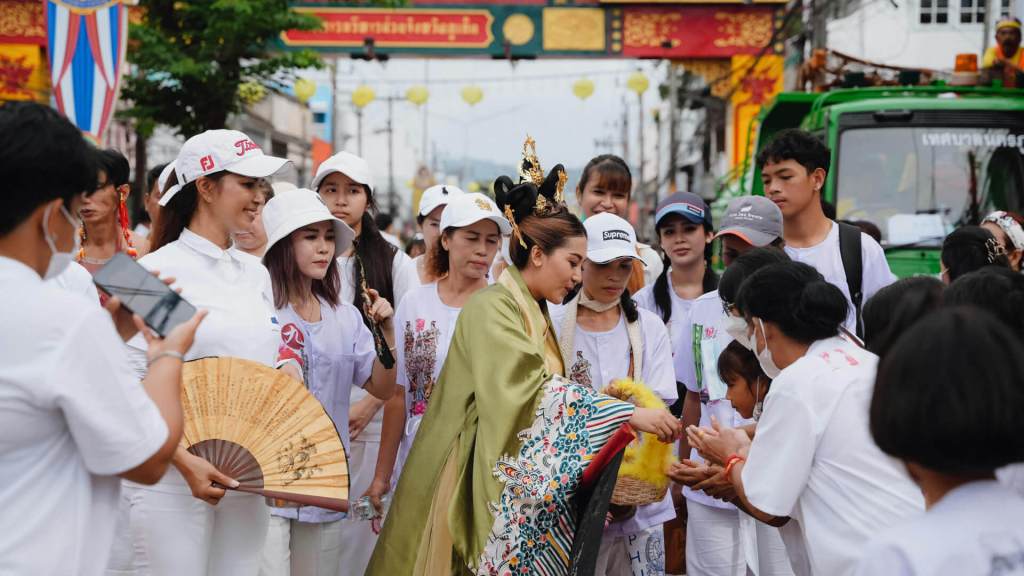
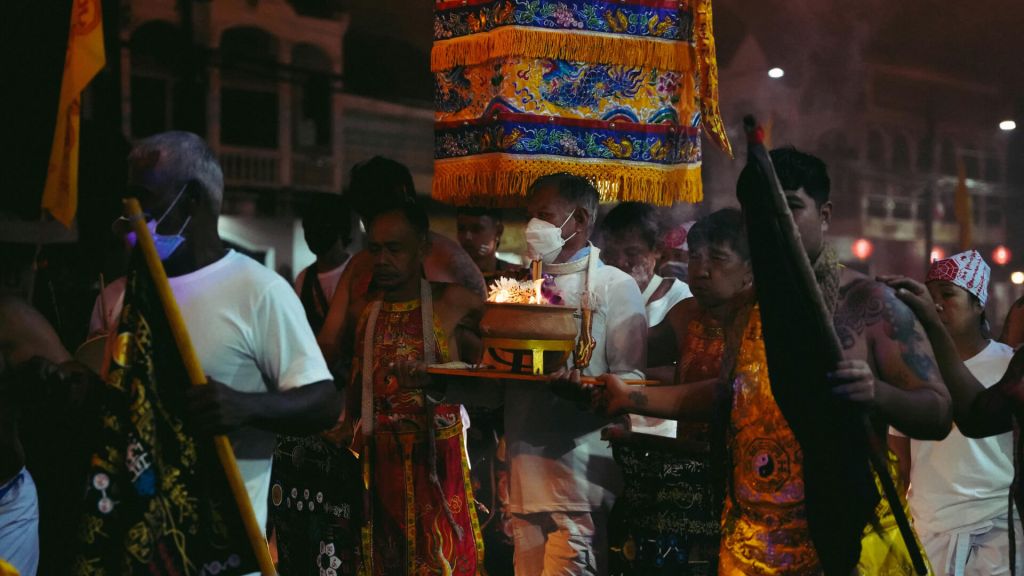
The key figures in the celebration are spiritual mediums known as Ma Song, who allow Chinese deities to possess their bodies and demonstrate their devotion by rejecting pain. These are the Ma Song, who you can usually see in the shocking photos flooding social media during Kin Je.
In a trance, Ma Song pierce their skin with needles, knives, and other objects, demonstrating their purity to people and gods and receiving divine blessings. During street processions, Ma Song pass the blessings to people, ridding them of all bad things.
Vegetarian Festival Rituals
- Raising of the lantern poles in Chinese temples on the first day of the ninth lunar month. The lanterns light the way for the gods to descend to earth and mark the start of the festival.
- Nightly temple ceremonies include collective prayers and meals. Later in the festival, temples hold fire-walking, hot oil bathing, and blade-ladder climbing rituals for Ma Song. The coals, oil, and blades are real.
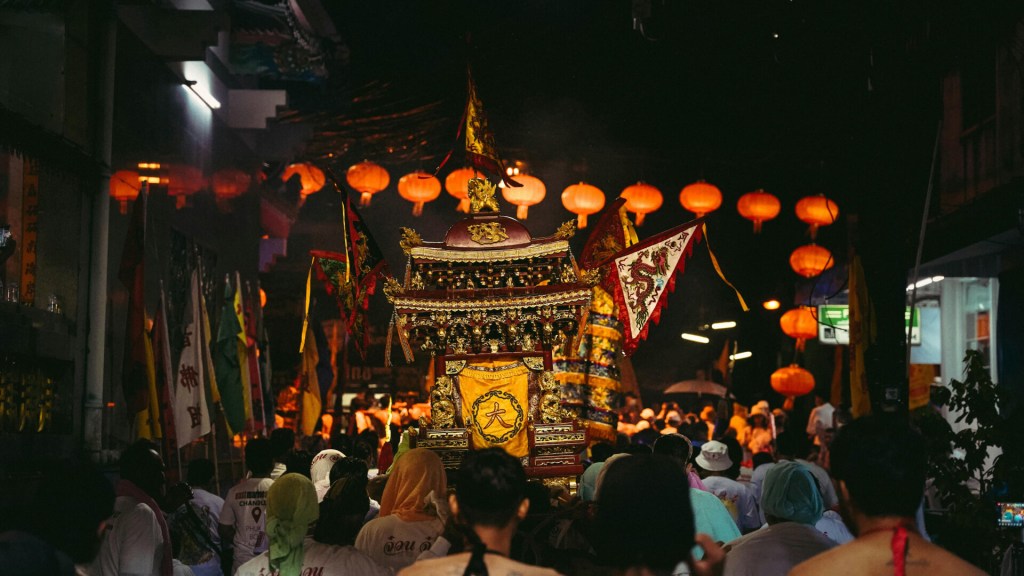
- Street processions of devotees and Ma Song with pierced faces as signs of their devotion to the gods. Ma Song perform rituals in a trance state, but without any anesthesia. The blood is real.
- The final ritual is the crossing of the bridge in temples (open to ordinary believers), followed by the closing procession in Phuket Town and the farewell ceremony to the gods by the sea in Saphan Hin. The festival officially ends the day after the gods are sent off when the lantern poles in temples are lowered.
If you are in Phuket during the Vegetarian Festival (October 2-11 in 2024), it is impossible to miss the street processions. The main Chinese temples are Tha Ruea Shrine near the Heroines Monument; Jui Tui Shrine, Pud Jo Shrine, and Bang Niew Shrine in Phuket Town; Kathu Shrine in Kathu; and Guan Yu Shrine in Chalong.
 Real Life in Phuket Magazine