
Having landed in Bangkok – Thailand’s strikingly modern and rapidly developing capital – many find it akin to Dubai or Hong Kong. The resemblance is particularly strong in the financial district with its impressive skyscrapers, or along the city’s main shopping avenues with brand shops, fancy restaurants, and luxury cars. Bangkok is no longer a third-world city.
Behind this modern Western facade, Bangkok still retains its delicate Thai soul, revealing itself to those who dare to walk off the beaten path and dive into the labyrinth of side streets away from the neon lights. A myriad of temples, narrow little alleys, canals with stilted houses on the banks where people smile and wave their hands to you – this is all Bangkok as well.
Imagine you have only one day to see it all. Are you ready? Let me be your guide to lead your way through Talat Noi and Chinatown, which I consider the most authentic areas, the heart and soul of Bangkok. Let’s get started.
We set off right after dawn when street vendors are busy setting up their stalls on the freshly-washed sidewalks. Our first location is River City, a shopping center and a modern art gallery overlooking the Chao Phraya river.
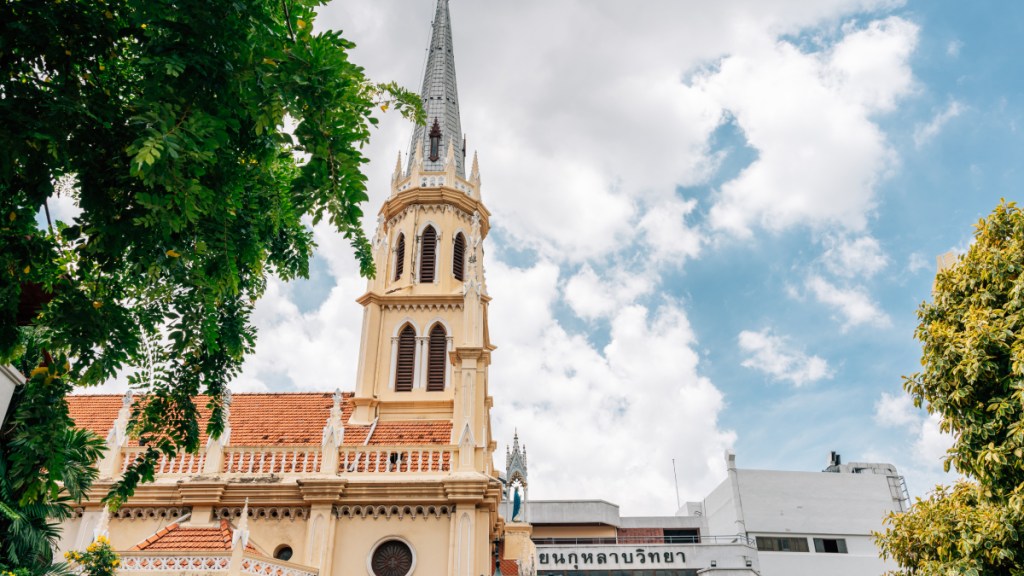
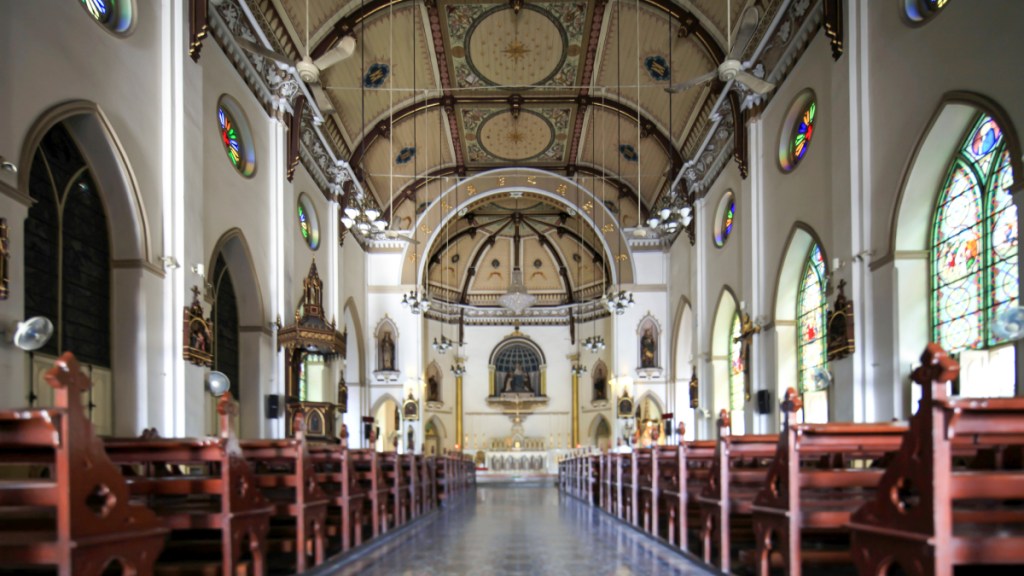
Hidden behind the mall is the old Holy Rosary Church, marking the location where the Portuguese community settled down in 1769 after relocating to Thonburi following the fall of Ayutthaya. This was when they built the first Catholic Сhurch in what is now known as Bangkok.
We continue our walk to the old Siam Commercial Bank (SCB) building, the first Thai bank in the country, built in 1906. Prior to that, all banks in the kingdom were foreign institutions.
From the SCB building, we proceed to the areas of the ethnic communities by the river. This was the spot where Chinese, Khmer, and Vietnamese emigrants disembarked after arrival to start new lives in Bangkok.
Bangkok still retains its delicate Thai soul, revealing itself to those who dare to walk off the beaten path and dive into the labyrinth of side streets away from the neon lights.
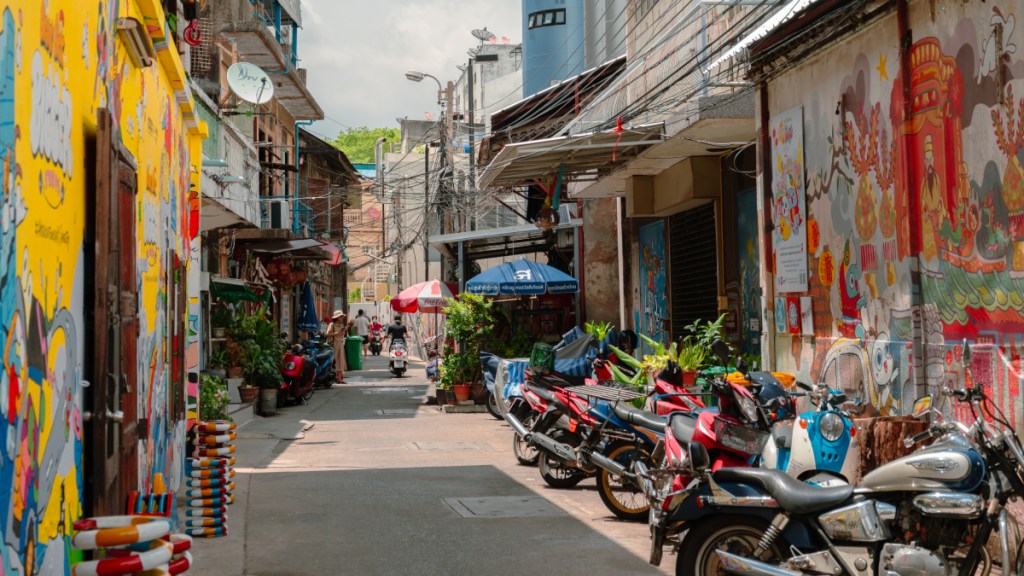
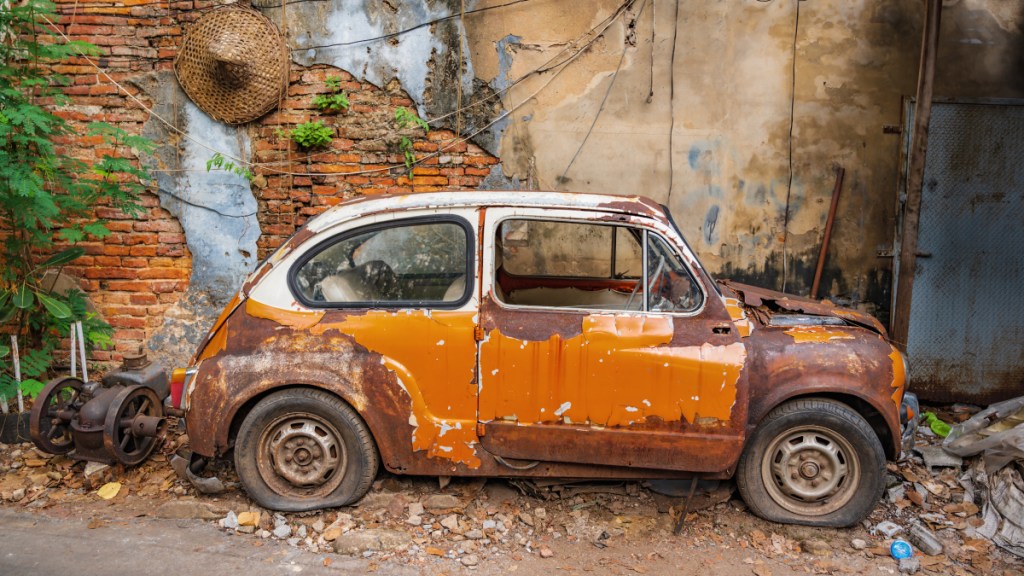
Next is Talat Noi. The district’s name means “The Small Market,” and it is a place where you cannot help but film every detail. We follow the Talat Noi Street Art, an alley of murals and photos, and pay a visit to the Rong Kueak Chinese Shrine before stopping by the Fiat-500 Antique Turtle Car, an old abandoned car turned into a world-renowned landmark.
From the Turtle Car, we proceed to the So Heng Tai Mansion. The impressive house of a Chinese tycoon is now home to a small café and – surprisingly – a scuba diving school. The So Heng Tai is one of the oldest such mansions in the city.
To have some rest and let the impressions settle, we stop for a coffee break at Mother Roaster or Hong Sieng Kong. Both are absolutely unique coffee houses, with the latter also boasting an amazing view of the Chao Phraya River.
Continuing our way to Chinatown, we navigate several tiny streets, enjoying the atmosphere while dodging countless motorcycles as there are simply no sidewalks. Finally, we reach a tiny pastry shop known as Khun Phu Curry Puff, which has been a landmark in Talat Noi for over a decade.
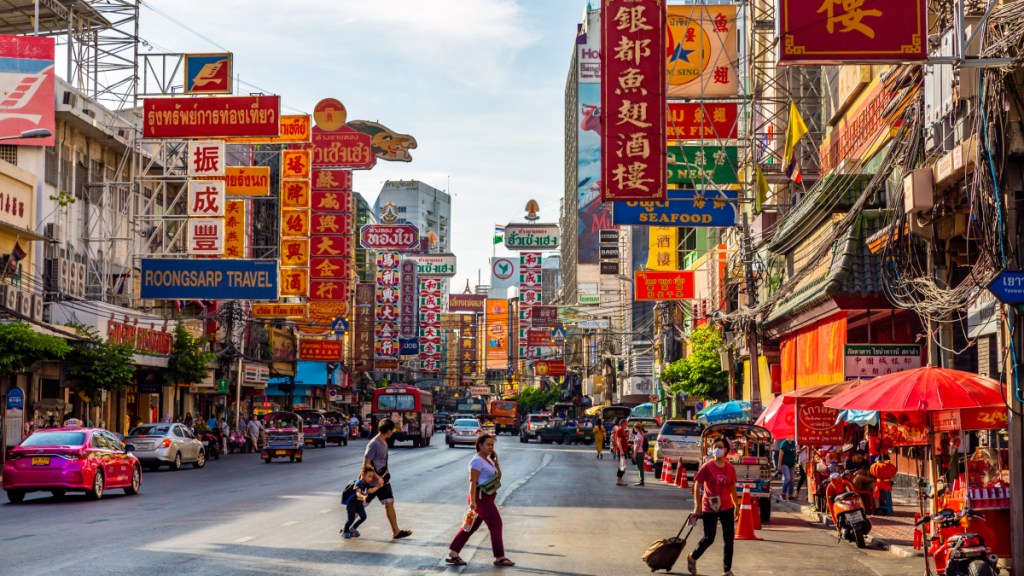
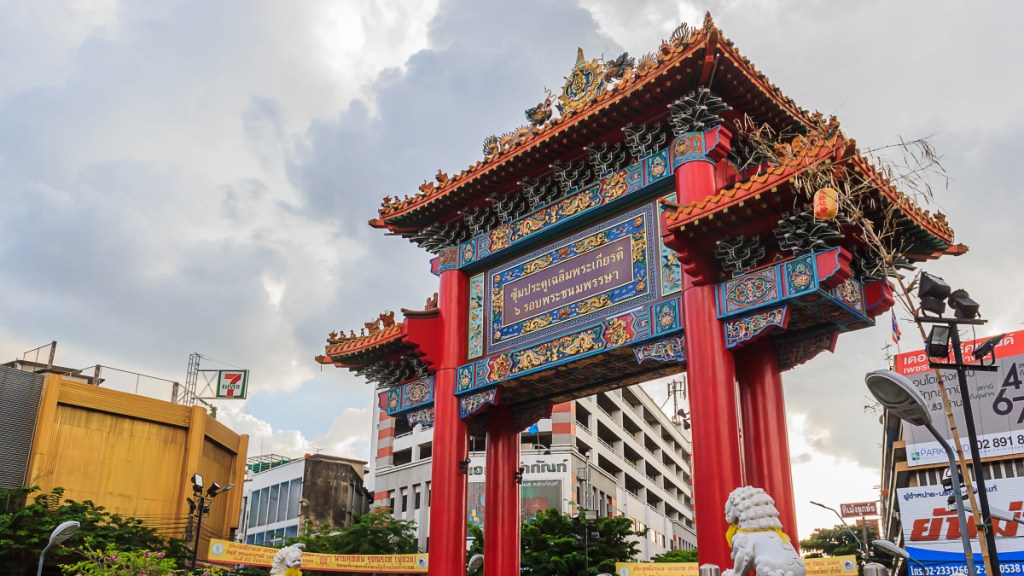
Having passed the shop, we reach Charoen Krung Rd and proceed to The China Town Gate, passing Chinese eateries and pharmacies until reaching Chinatown’s main gate. This is where Yaowarat Rd starts, the main street of Bangkok’s Chinatown, world-famous for its red lanterns and Chinese street signs.
The official history of Chinatown dates back to 1782, though I’d rather add a meaningful prelude. After the fall of Ayutthaya, King Taksin founded the Thonburi Kingdom with its capital at the estuary of Chao Phraya. As the Chinese clan provided significant support to Taksin the Great, the King allocated land on the eastern bank of Chao Phraya to the Chinese, so they settled right across the river from his palace.
Ten years later, the Rattanakosin Era began with King Chakri crowned as Rama I, founding the current Chakri Dynasty. For safety reasons, King Rama I relocated his Grand Palace from the western bank to the eastern, while the Chinese community, known for their support of King Taksin, was pushed further down Chao Phraya in the southeastern direction.
For a certain period, the Chinese were not allowed to settle down outside the designated area. Yet, the community flourished, and the area’s rapid development brought Chinatown to the status of one of Bangkok’s main commercial districts in the XIXth and XXth centuries. Known for business, Chinatown was also home to numerous casinos and gambling dens, opium houses, and entertainment venues.
In the XXth century, Bangkok expanded immensely, and the commercial significance of Chinatown, as well as its entertainment notoriety, gradually deteriorated. Nowadays, Chinatown is an area of choice for young entrepreneurs opening numerous boutique hotels and one-of-a-kind bars and coffee shops. And this is exactly where you should turn your feet after sunset!
By Olesya Lyashenko
Telegram: aliceinthai
Instagram: aliceinthai
 Real Life in Phuket Magazine