
Phuket’s eco-dream of its beautiful past
Recognized as one of Phuket’s symbols, sea turtles are rarely seen on the island now. Back in the day, these beautiful marine animals felt at home all along the Andaman coast of Thailand peacefully sharing the beaches with humans. Then they simply left Phuket for good – because of us, people.
While in some other places turtles disappeared due to of excessive human activities targeted specifically at them (such as hunting turtles for meat and shells), in Phuket it was tourism that sparked the turtle exodus. At some stage, over-development resulted in the coastline becoming too noisy, too dirty, and too dangerous. The turtles just left.
Though the development peaked in Phuket, the whole Andaman coast was affected by the island’s rise to tourism glory. Beaches in Phang Nga are still mostly pristine, but the turtles try to avoid them anyway.
If you haven’t been to Khao Lak or Thai Mueang, please consider visiting these areas. Even a short trip will be enough to see which beaches are loved by turtles, these amazing nomads of the world ocean.
In preparation for the journey, have a look at nighttime satellite images of Phuket and Phang Nga. These pictures highlight the main distinction between the island and the mainland.
Despite being separated by mere kilometers, Phuket at night is one bright spot illuminated with all sorts of artificial lights, while Phang Nga is covered in tranquil darkness. Arguably, this is what turtles see from the ocean when approaching the coast – the quiet darkness of Phang Nga versus the hustle and bustle of Phuket.
The distinction got to be crucial for sea turtles, as witnessed by the number of turtles nests found in Phuket (two or three for a whole five-month-long season) versus Phang Nga (two or three per month).
Ten or even twenty turtle nests per season are close to nothing compared to what people enjoyed in the early 20th century, just a shade of the glorious past. However, the current numbers are a great improvement on what was recorded ten or fifteen years ago, when the number of nests in both Phuket and Phang Nga was zero.
The changes began after Phuket and Phang Nga joined forces to change the picture. And the combined efforts of government, business and the community have begun to bear fruit.
Here are the statistics illustrating the trend: In the five years from 2012 through 2017, there were zero turtle nest findings in both Phang Nga and Phuket. In 2018, the mainland recorded three cases. By 2020, the number of cases in Phang Nga increased to two dozen while Phuket’s record still stood at zero. The first nest in Phuket was discovered in 2021. The 2022-2023 season brought three cases in total, and in the 2023-2024 season, there were two by the end of February.
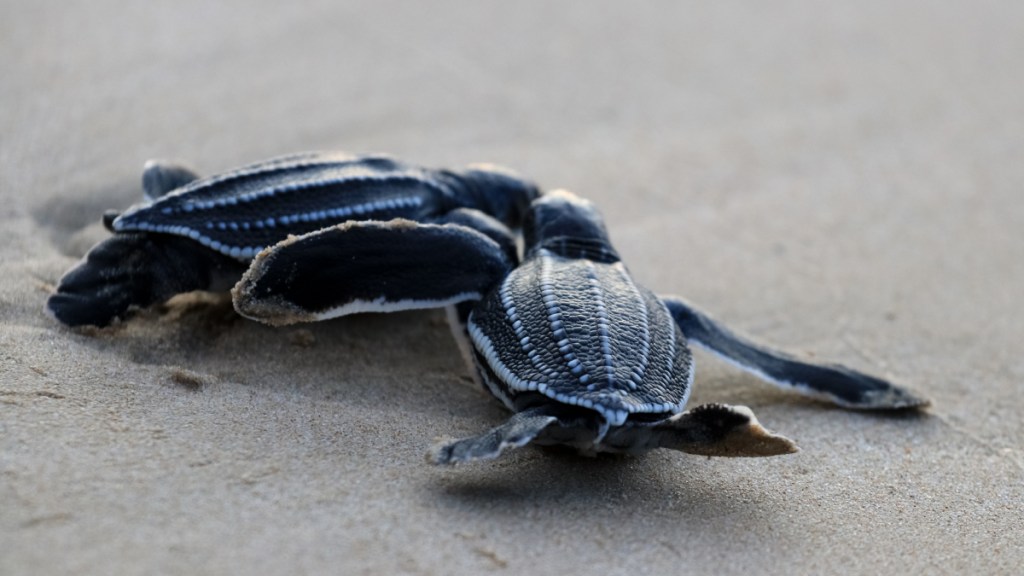
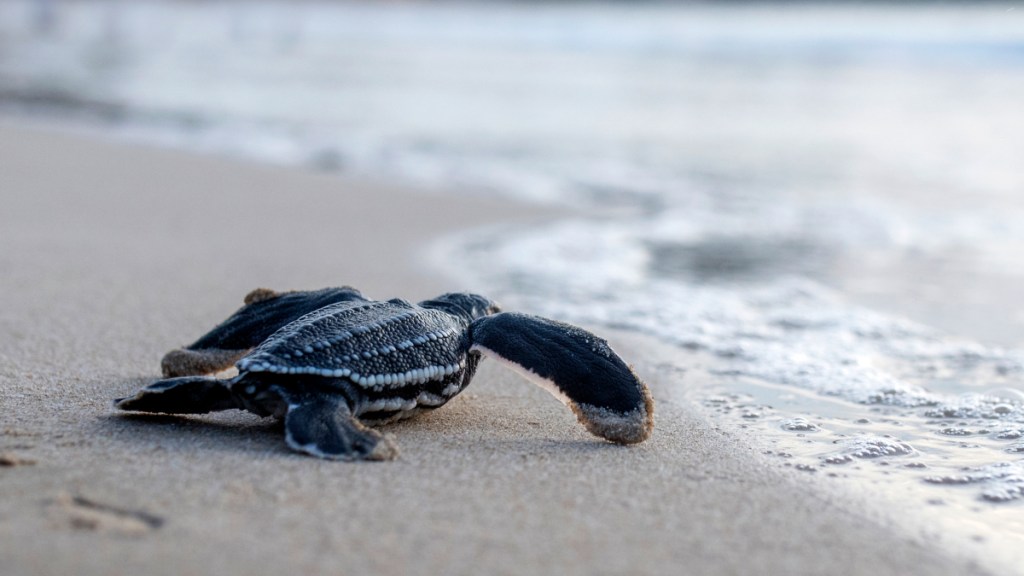
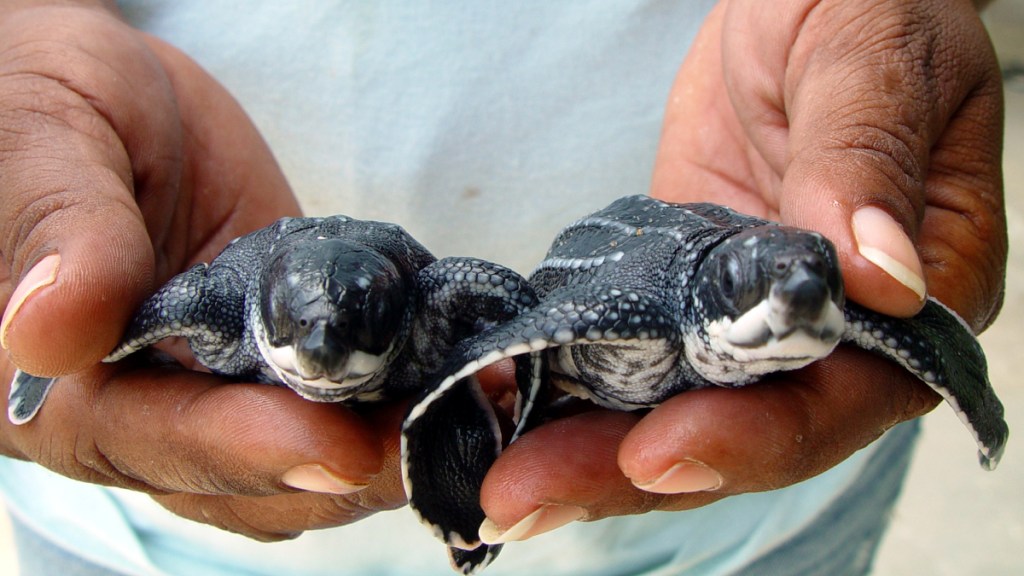
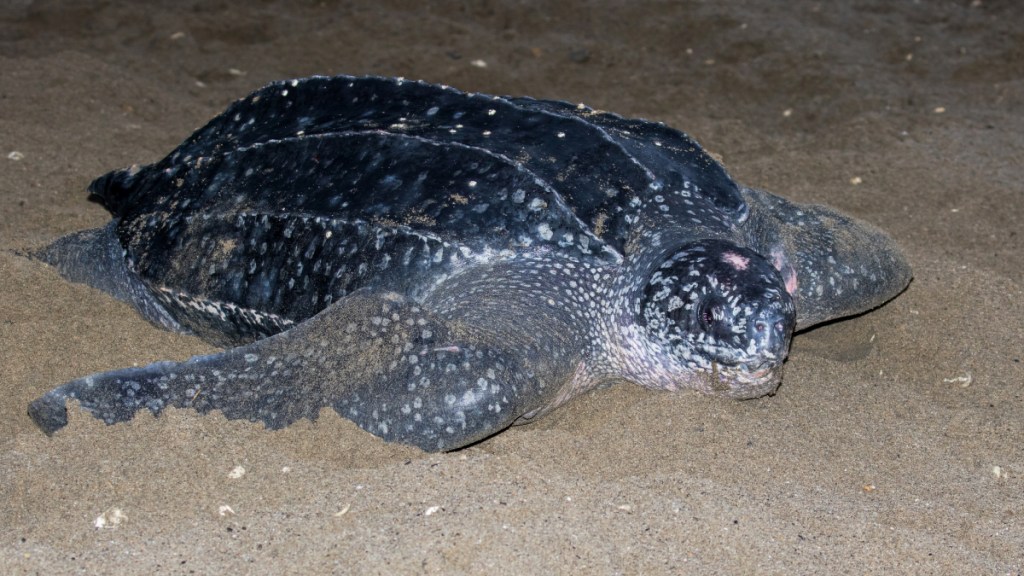
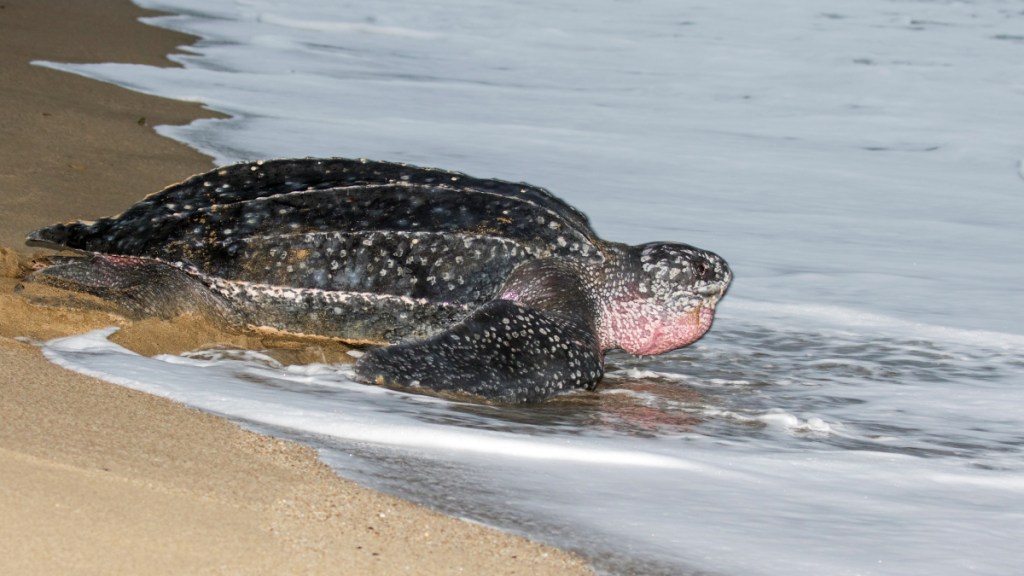
Several species of sea turtles inhabit the Andaman Sea, including Dermochelys coriacea or leatherback turtles. These are the largest of all living turtles and the heaviest non-crocodilian reptiles, sometimes exceeding lengths of up to 2 meters and weights of 500 kilograms.
The leatherback’s egg-laying time starts in mid-November regardless of whether meteorologists have declared the beginning of the low season or not. In 2023, the first two nests were discovered on Nov 10 and Nov 21, respectively, when the weather guys were yet to confirm the change of weather patterns.
The first two nests were found at To-Lah Bay south of Natai Beach, a place the common public has never heard of. The species of the turtles is still unknown, and the tracks of the sand were not big enough to claim it was a Dermochelys coriacea.
The first leatherback arrived in Phang Nga in December. In Phuket, an olive turtle’s nest was found in late January and a leatherback’s in mid-February.
Hatching takes place approximately 50-60 days after the eggs are laid. In the meantime, the mother turtles can return and lay more eggs.
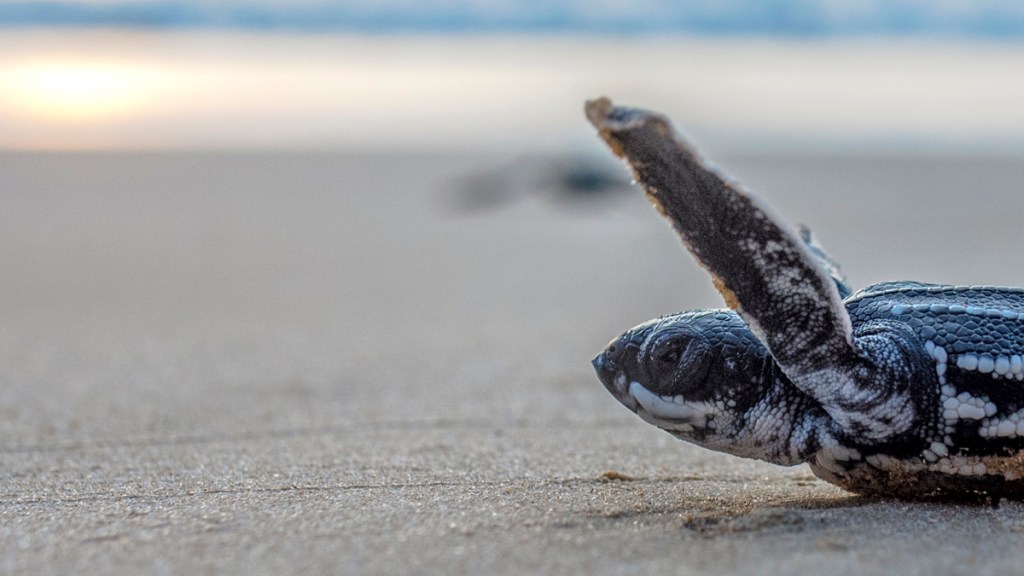
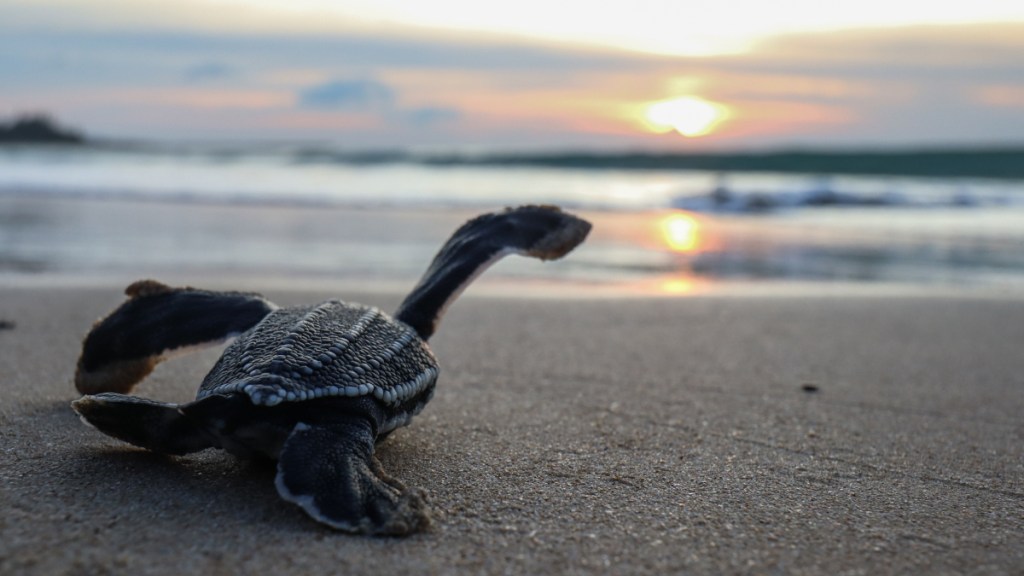
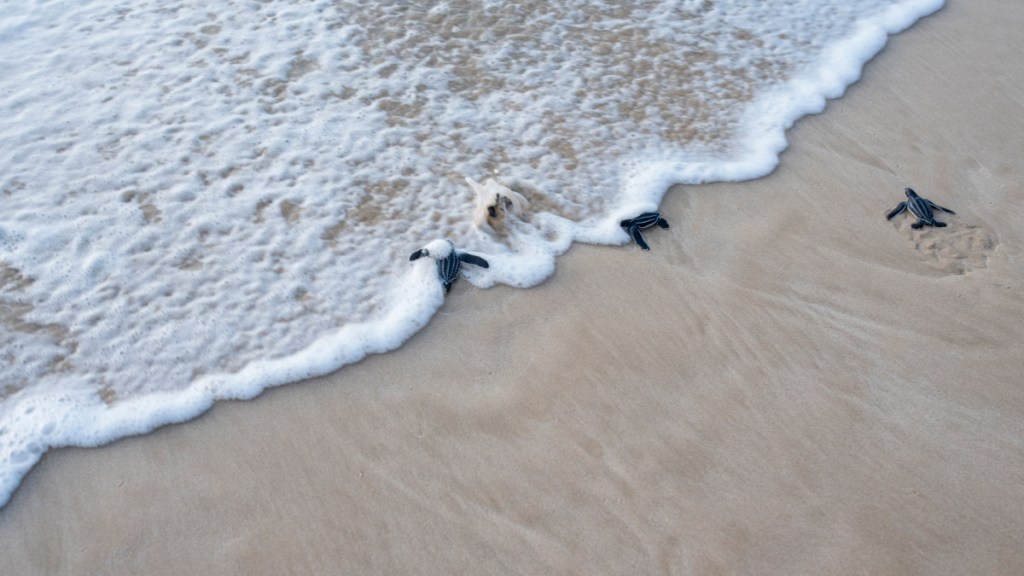
Wildlife experts play a significant role in increasing the survival rate of baby turtles by protecting the nest and controlling everything related to the hatching. With human help, dozens of tiny leatherbacks head to the sea each time. Yet, while in the water, baby turtles are on their own.
Baby leatherbacks have many natural enemies, but for the species, humans are the biggest. Plastic pollution, oil spills, and commercial fishing are among the top threats to sea turtles.
Each turtle release event includes a lecture on turtle protection and a call for people to do whatever they can to help restore the sea turtle population.
The good news is that leatherbacks are already returning to Phuket, as evidenced by regular nest sites. However, continued efforts by all parties, including tourists, are needed to encourage the turtles to return in greater numbers.
There is no such thing as a contribution that is too small. Refraining from leaving plastic litter on the beaches does matter. Saying “No” to plastic bags at 7-Elevens does matter. Sharing pictures of leatherbacks and raising awareness about them does as well.
Some would say their personal efforts are nothing more than a drop in the ocean. But an ocean is literally nothing but a drop, plus a drop, plus a drop. A million drops make a tide of positive change, and it has already begun, as witnessed by the continuing turtle nest findings.
 Real Life in Phuket Magazine