
Traditions and modern fun at the Songkran festival

Commonly referred to as the Thai New Year or the Thai Water Festival, Songkran is the biggest, merriest, and most important of Thailand’s annual festivals.
Limiting Songkran to the world-famous water fights would be a grave mistake, as the festival has centuries of tradition behind it. However, excluding this activity would be equally erroneous, as having fun (“sanook” in Thai) is among the most important traditions.
Songkran is all about celebration – sacred and auspicious, fun and indulgent to the point of being obnoxious. Just like all New Year celebrations around the world, Songkran is both. And this is why it is so special.
The word “Songkran” traces back to the ancient Sanskrit word “saṅkrānti”, meaning “moving into.” It signifies the Sun’s transition from the sphere of Aries into that of Taurus. In ancient India, this astrological passage within the zodiac signified the new harvest season. In Thai tradition the event – Maha Songkran, or the Great Songkran – was also linked to the change of both agricultural cycles and meteorological seasons.
The Thai Songkran is celebrated throughout the Kingdom on April 13. The Royal Ploughing Ceremony – an ancient royal rite marking the traditional beginning of the rice-growing season – is held one month later, in mid-May. The second half of May is also the start of the rainy season, while mid-April is the period of the hottest weather.
Thais regarded Songkran as New Year’s Day until 1889 and still the traditional Songkran greeting is “Sawasdee Pi Mai!” which means “Happy New Year” in Thai.
Indispensable to Songkran are scented water, coloured powder and floral garlands.
This year, Songkran will be officially observed as a four-day national holiday from April 12-15, although various events will extend beyond these dates. Celebrating Songkran’s inscription on the list of the intangible cultural heritage of humanity by UNESCO, Thailand will hold a special World Songkran Festival from April 1 through April 24. Yet, the main festivities in Phuket will take place on April 13.
As Theravada Buddhism flourished in Thailand, the Hindu festival of Songkran took on new dimensions. One of the revered traditions is merit-making, with people offering food to monks and visiting temples to pray. This is also believed to ward off bad luck from the previous year and bring good luck for the new year.
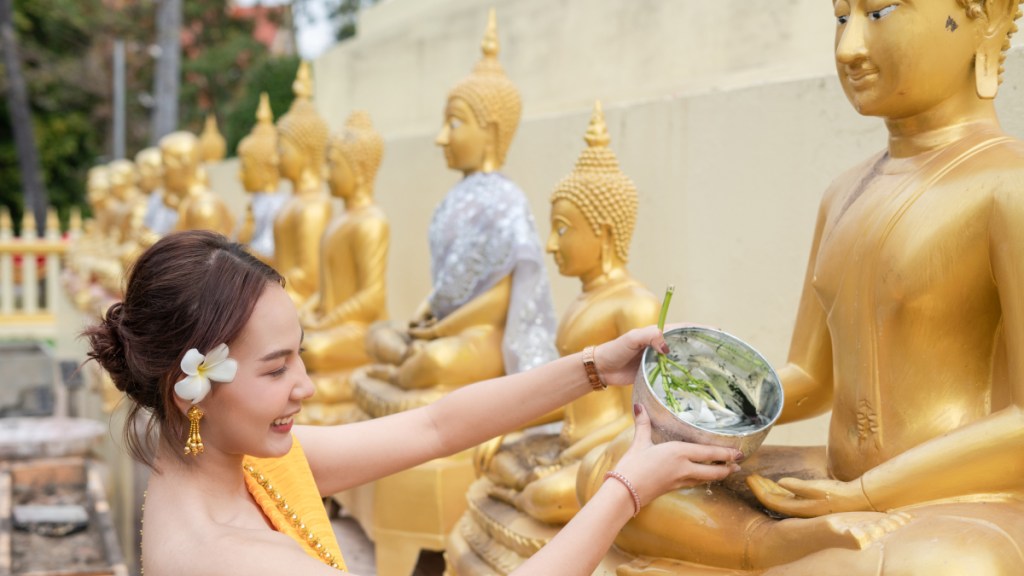
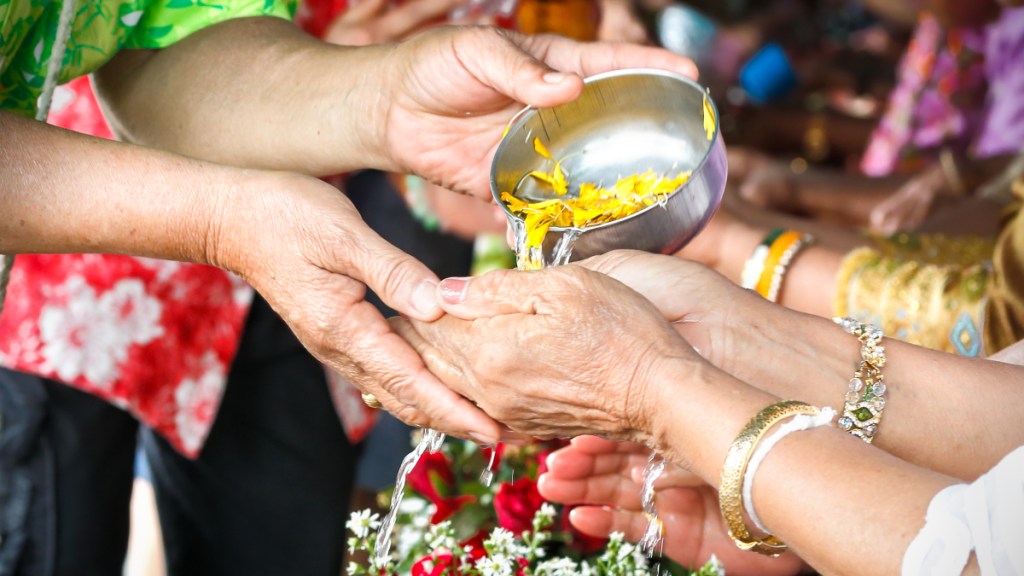
Another main activity is Song Nam Phra, a ritual that involves pouring scented water onto sacred Buddha images at temples and at home. Songkran is also a time to pay respect to elders, and young people prepare scented water with which to wash their parents’ feet and hands in a ceremony called Rot Nam Dam Hua. The parents, in return, give their children blessings.
Preserved in Phuket is the beautiful tradition of making sand sculptures on the beaches, as well as sand stupas at Buddhist temples. Releasing aquatic animals into the sea is also one of the island’s activities.
Indispensable to Songkran are scented water, coloured powder and floral garlands. Later, they are given to relatives and friends to express love and respect as well as received from them with the same wishes.
As many traditions include paying respect to elder family members, many Thais travel during Songkran to their home provinces to reunite with parents, grandparents, and other relatives.
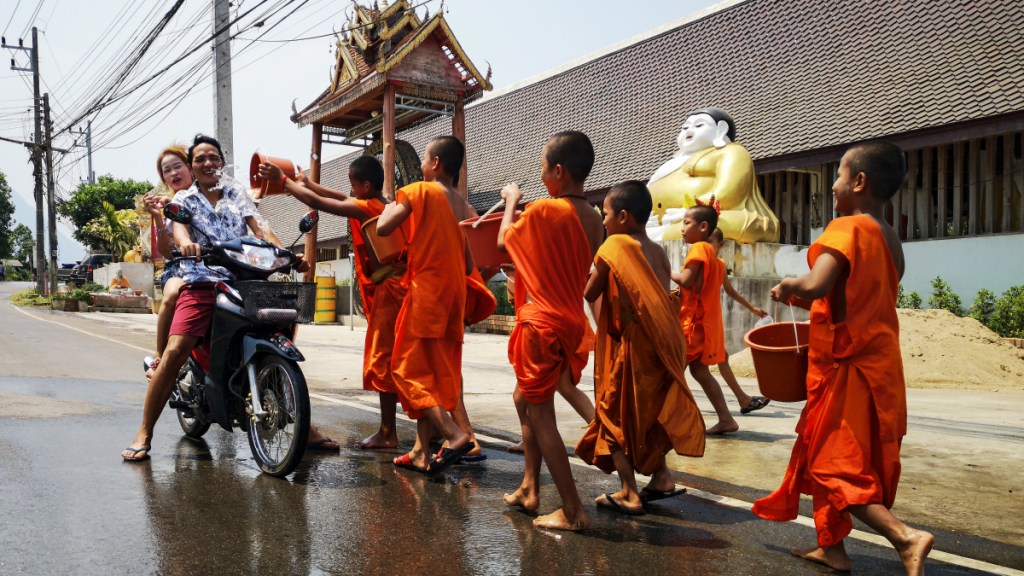
Last but by no means least are the world-renowned water battles in the streets. Armed with water guns, buckets, and hoses, people drench each other as a symbol of cleansing and renewal. Just as with the gentle washing of Buddha statues, this aims to clear off bad luck and negativity from the previous year, but in a much, much wilder way.
The water splashing is unavoidable, contagious, and fun. It is an experience you will never forget. To ensure memories remain positive, dress accordingly, pack your valuables in a waterproof bag (or preferably two), be careful on the roads, behave responsibly, and for goodness’ sake, don’t get mad if you get showered unexpectedly.
Songkran is all about good mood for all, so enjoy your “sanook” and remember to say “Sawasdee Pi Mai!”
 Real Life in Phuket Magazine