


By Maciek Klimowicz
Photography: Anka Fateeva and Adriano TrapAni
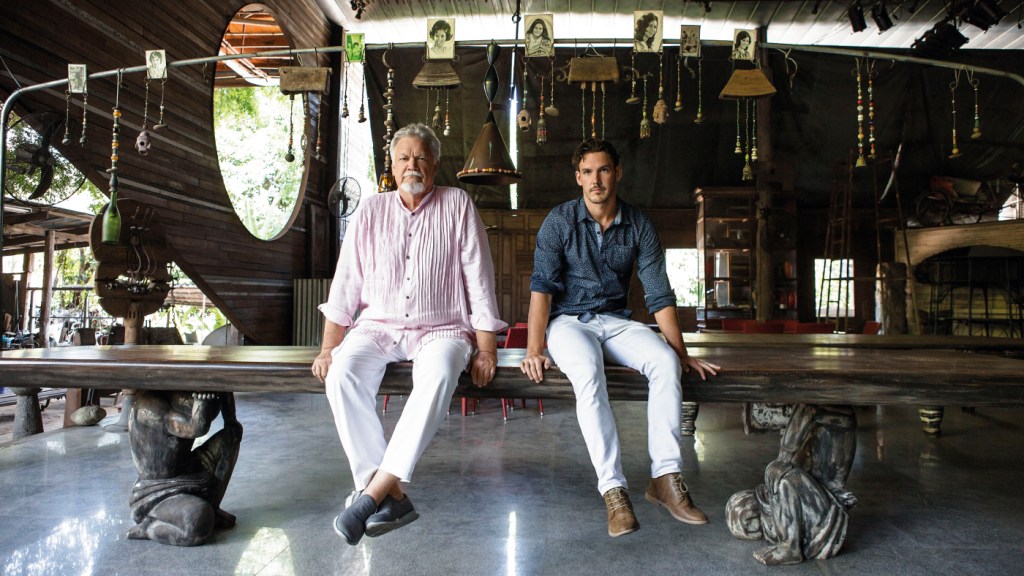
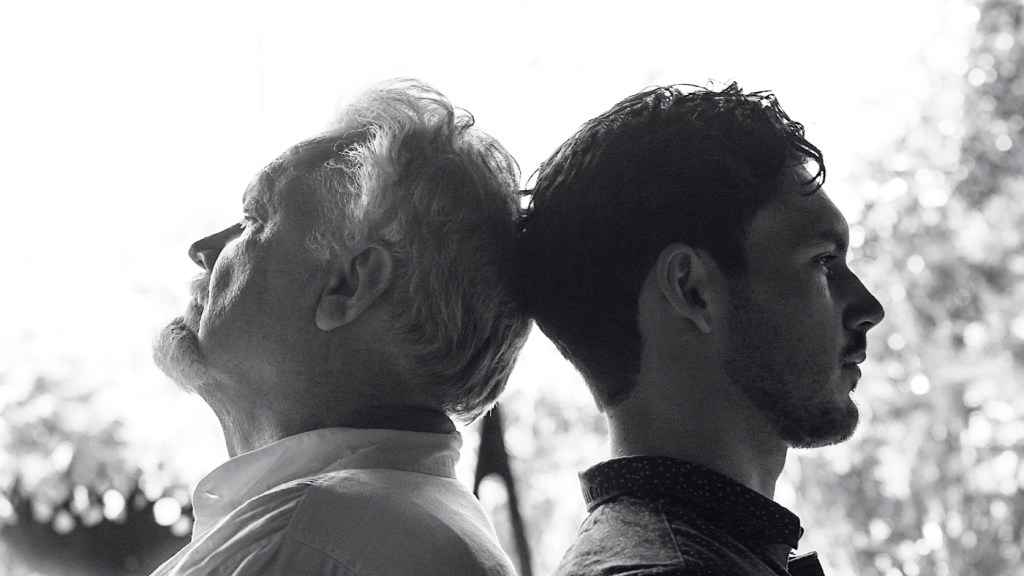
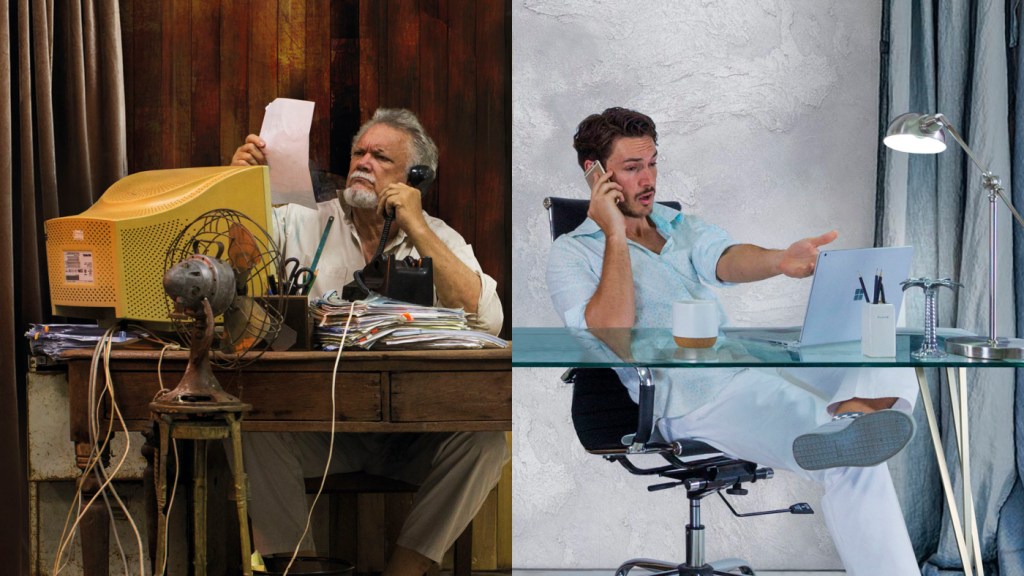
Designer, entrepreneur and the creative force behind Underwood Art Factory, John Underwood has been interviewed by the local Phuket press a number of times. This, however, is the first time that he sat down to an interview together with his son, Zachary. Father and Son, two artists and business partners, share with us their thoughts on more than just their life in Phuket.
The Father: John Underwood
How old are you?
John Underwood: I’ve just turned 66.
And how many of those 66 years have you spent here in Phuket?
Approximately 25.
And the remaining 40 years or so?
In Australia, I’m Australian. I was born in a livestock area and the first college I went to was an agricultural college — which was a disaster for me as a creative person. And then I went to art school – Victorian College of the Arts in Melbourne.
And what started you off on your way to Phuket and your current life?
My career launched with the World Expo in Australia in 1988. We did very well, creating a very popular series called ‘Human factor’. This lead to us going from one Expo to another, Seoul in Korea, Seville in Spain and so on. That’s how we started working internationally. We ended up in Thailand because a client of ours was aware of our contribution to the Expo and was doing Seacon Square in Bangkok. We got that job and later set up in Bangkok. And then, at the end of the 90s, we closed the factory in Bangkok and moved to Phuket.
You visited and worked in many places. What kept you here?
We moved after the financial crash in 1997 when it seemed that the only market that wasn’t affected as much was tourism. So I had to decide whether I wanted to live on the outskirts of a big city or on a tropical island. So, I moved to Phuket and stayed. My children grew up here, went to school here and it’s been a good life.
Why did you consider Phuket the best place to stay?
Life is a series of events. And if you live somewhere where everything has become commonplace, where nothing ever happens that you don’t understand, it can get quite boring. So, when I came to Thailand, not knowing how to speak, read or write the language, which I still don’t, every day was exciting, just to solve little problems was a challenge.
While Australia felt so isolated, as an Asian central hub, Thailand has such a thriving international community. I got an opportunity to work with clients from all over the world, It’s certainly more of a stimulating environment here in Phuket.
Would you then call yourself an adventure seeker?
Not sure. I was always looking for that something different. Where I grew up, in central Queensland, the nearest town was 50 miles away, it was very isolated. I like being surrounded by people. It wasn’t a place for me to live in.
I’ve read some previous interviews with you and you’ve been at times referred to as “Phuket Institution.” How do you feel about that?
I don’t know about that. There’s an awful lot of tourists visiting Phuket but it’s also a small island, so you ultimately end up getting to know people and people to know you.
Your kids grew up in Phuket, their experience of it must be very different from yours.
For them, it’s the normal thing. And I think it must be less stimulating. And maybe they dream of going back and farming in Australia (laughs).
Has your life here changed a lot since you arrived? Have you been successful form the get-go?
As you get older, the way you view success changes. One thing about success is that unless you’re incredibly lucky and you go straight up, there will be lots of ups and downs. And both of those things are important to teach you how to survive. Which also makes it interesting.
And when you arrived in Phuket, did you have a vision of what you wanted to achieve?
Looking back, it’s way easier to think of a vision than it is when you’re actually there. But I think it’s basically the same for everyone – to create a stable financial situation where you can enjoy a reasonably comfortable life. And if you have to do something, you better enjoy it!
Then you have the smaller goals – there are things you want to do, the things you want to design, the goals you want to focus on. And you try and do those things, and if you succeed, it’s fantastic. Like knockdown villas we have developed, the first designs I made were maybe five years ago. I remember showing people little drawings of it and telling them what it’s going to be like. And now, we are just about to finish our first project of 30 villas on Koh Yao Noi.
Tell me more about that idea. Where did it come from?
The Idea initially started from working on remote projects, like Four Season tented camp Chiang Rai or the one and only Reethi Rah on some remote islands of the Maldives. You realize that building a resort on a remote island the traditional way, you end up destroying the landscape, and that’s the total opposite of the intention of developing out there in the first place. So what I was trying to develop was a structure that integrates with nature; a building that once you’re inside, the space is controllable and safe, and has minimal impact on its surroundings. Our Villas are produced in our Phuket factory and then assembled on site, meaning most of the work happens offsite. Outside there’s just natural environment, inside it’s five-star quality, lots of space, high ceilings. Our buildings are eco-friendly and cost-effective.
And all of this is your idea. But now your son, Zachary, has joined the company. Are you ready to turn over some of the projects to him?
He is already leading our project in Dubai, developing new ways of looking at some materials like pressed metal tiles. He’s also worked with me over the last two years, developing the buildings that I mentioned. And it’s very enjoyable, working with him. Every one of us has a sort of a self-bubble around themselves and when you rub it up against someone else’s, it takes a bit of thought to accept their concepts, but then you realize that it’s actually the better way, because it broadens your perspective.
There’s a pretty big age difference between me and him. And with those 40 years, I’ve built a lot of experience which I hope he realizes. And one day he is going to want to lead it and I’m going to pass it on.
Father and son, big age difference, working together — what’s that dynamic like?
If we were a father and a son working together 30 years ago, things would have been a lot different, because the progress of technology was way slower. Now, whatever tech Zack is using, might be obsolete in two years and we both need to catch up quickly. But also, whatever I’ve experienced, is not that relevant. I have to learn a lot. Like the 3D printer we are getting, I’ve never owned one and neither has Zack. And we will both benefit from it, using it for different things.
And on an everyday basis, when you’re working together, what’s the atmosphere like?
It’s good. Of course, there’s friction, if there is no friction then it’s a very diluted family, but there’s never friction that cannot be resolved. We both have learned to take a step back and work together, and use the different skillsets we both have.
We have this factory and it’s a toolbox that we can use in many ways. We have laser machines and water jets that are tools waiting to be used creatively. So, it’s not like a family business that he has to conform to, to join it. We have this creative playground and he gets to use it anyway he’d likes.
What do you want to use it for? What’s your vision for the future of the factory?
My focus is on the buildings I mentioned. Over the years, I’ve come up with many products that I’ve developed, however this is the first that’s generated some major outside interest.. I think it’s the future.
Last question. Do you think you’ve been lucky?
Oh, hell yes, I was!
The Son: Zachary Underwood
Your father grew up in Australia and all he wanted to do was to leave. Do you feel the same about Phuket?
Zachary Underwood: Phuket has always been home for me, I’ve been in Thailand since I was little, growing up in Bangkok and down here. I guess there’s a bit of difference between rural Australia and this island, so I can understand why he left.
And you never felt like leaving it behind?
I do travel a fair bit with work, but I feel lucky to have Phuket as a base. Sometimes it gets a little too cozy so I do escape from time to time — mostly to Bangkok, just to get a taste of the city life for a bit. It’s great for a long weekend, a short burst to completely change the scenery.
And how does coming back feel?
I was in university in London prior to moving back to Phuket, so it took some readjustment coming back.
And how about coming to work with your father?
It was a bit rocky when I first started. It took a while before we started to get in sync and understand how we fit into each other’s process.
We still butt heads sometimes, but the projects are really stimulating and it’s something I’ve always imagined myself doing, creating these fantastic pieces. I’m passionate about the work we do and the truth is, I’m a bit of a workaholic.
And those headbutts – who wins those?
I‘d say it’s a 50/50 split. You have to exert a lot of humility and assertiveness in the equal measure because it’s the quality of the work that’s at stake. We often both have different ideas and the key to all this is to be as open-minded as possible. He has lots of experience in turning ideas into a reality. A lot of the time that’s the transition you have to overcome – from what it looks like on paper to when you have to actually build it. You have to translate it properly because you can have an incredible idea, but unless you know how to build effectively, it doesn’t make much sense. So, he and I can look at a project from two different perspectives and come to a compromise.
What is your perspective?
I mainly focus on concepts, visualizations, that sort of thing. I’m a bit of a computer nerd, that’s what I’ve learned at school – 3D modelling and such.
And you teach your father that — Is he a good student?
I taught him Photoshop over the past few years and he’s actually become more prolific than I am. I feel that as long as you have the creative mindset, you can learn how to utilize the tools. He was originally a painter and a sculptor and now he fits that all in the digital paradigm, and it’s such an organic fit with him.
What did you learn from him?
What dad is really good at is making the machine that makes the production possible. We call them Jigs which is the machine that makes the machine. What we do here is we make templates to aid the process, which helps our Thai craftsman keep the quality high and consistent.
Still, at times you see your idea getting reshaped right in front of your eyes. How do you react to that?
It’s humbling, I guess. You learn not to be too precious about things. Sometimes it’s about stepping back from what you’re doing, getting some perspective. It’s worth it when the end result is something that really shines, that makes the client happy and that you’re proud of. You have to take the limitations of the machinery into account, maybe I’m at times naïve in terms of our capabilities to build these marvels, but dad has the experience in turning the concepts into a reality. But I’m a fast learner.
Do you have an idea for what comes next? After all, you will probably be the one to take the company into the future.
How does that saying go? «The first generation builds the business, the second makes it a success, and the third wrecks it.” I hope it doesn’t skip a generation! (laughs). But really, we have super exciting projects in the pipeline, like our current one in Mauritius where we are developing a whole turn-key resort. Taking care of everything from the structures to the interiors and everything involved with it. This is our future. I still really enjoy designing things on a much smaller scale, but what we want to do is to incorporate those into the bigger package of the building resorts. But yes, I still enjoy making those funky, quirky things.
What was the last funky thing you designed?
Currently we’re working on a project in Dubai, building this decorative birdcage which is absolutely huge and also incredibly detailed.
I see that, just as your father, one of the things that get you going is creativity. What other things did you inherit from him?
As much as you don’t like to see your parents in yourself when you’re young, as you grow up, you start noticing a lot of similar traits. It’s a scary realization, but it’s something you have to approach with a certain level of introspection. For example, I’m realizing that we share the same passion for creating art. I’m probably also just as stubborn as he is.
Do you think you’re ready to take the business over?
The longer I’m working the more I realize that it’s not so much about being ready as it’s about being willing to take up the challenge.
Are you? How would you feel about telling your dad to chill out, go, let’s say, fishing, and running this place yourself?
The thing is I know him too well, he loves the work, this is what he wakes up for in the morning. So, I can’t imagine doing that to him, it would be too cruel.
Over the last couple of years, the responsibilities have shifted, I take care of all the headaches of the organization and production side of the factory while he does all the shop drawings. We’ve found a nice way to combine our skillsets. He’s been doing this for decades so I feel like he deserves to have a break from all the nitty-gritty of running the factory.
The factory is what gets him out of bed, what gets you out of bed?
Gosh, Caffeine! (haha)
Learn more at underwood-phuket.com
 Real Life in Phuket Magazine